
#59.14 | "Back in Zürich" [FICTION]
Global world order ~ Cars > Trains ~ 41,000 deaths ~ Swiss neutrality and flexibility ~ Ryndel Corporation ~ EMEA HQ

Note: The following is a work of fiction and not necessarily representative of my own personal views. On January 8, I committed to writing a serialized novel, 500-words-a-day, for the next thirty days. Every day, I sit down and write 500 divinely inspired words as the story unfolds in my head. Please don’t send me angry DMs or comments; I’m just a conduit for the Universe! Enjoy!! 🎉
XIV. “Back in Zürich“
As one man's quest to play Counter-Strike jeopardizes the stability of global world order, 741 miles away south in Switzerland, the Deutsche Bahn express pulls into Zürich Hauptbahnhof, the busiest train depot in all of Europe. Over 419,000 passengers pass through Hauptbahnhof every day and as Marie and Professor Kovačević step onto the platform, they find themselves surrounded by commuters, students, and tourists alike all in the bustling crowd.
“Honestly, what madness,” mutters Marie as she and the professor jostle their way through the crowd. “How on earth you manage this circus daily is quite honestly beyond me.”
“You dislike trains?”
“Of course. They’re crowded, smelly, and horribly constricting. Practically the most anti-American thing I can imagine!”
“Oh?”
“In America, everyone drives about in their own armored fortresses. Privately. It is the American way! We leave and arrive whenever we wish, listen to whatever we want however loud we want, and blast AC or heat as we see fit. America’s about freedom! Something you Europeans have clearly forgotten all about.”
“41,000 people a year die from automobile deaths in your America.”
She shrugs. “The price of being free and a small cost to pay, I believe.”
The old professor shakes his head sadly. “One day, Marie, I hope you’ll have children of your own. Then I think you’ll find life not so without value.”
“A nice sentiment and one I appreciate. I severely doubt it though.”
They finally make their way to outside the station. Professor Kovačević clutches his briefcase tightly against his chest the entire time with a white-knuckle death grip and Marie scans the taxi cab stand and other queued cars for their ride.
At last, an unmarked silver Range Rover, three times larger than all the other rink-a-dink Euro-compacts around it, pulls up and its rear passenger door pops open. Professor Kovačević blinks when he sees the driver seat up front is empty.
“Entirely autonomous,” Maries explains as she climbs in, “come on now, get in. We must be going or we’ll be late. They’re already likely there and waiting.”
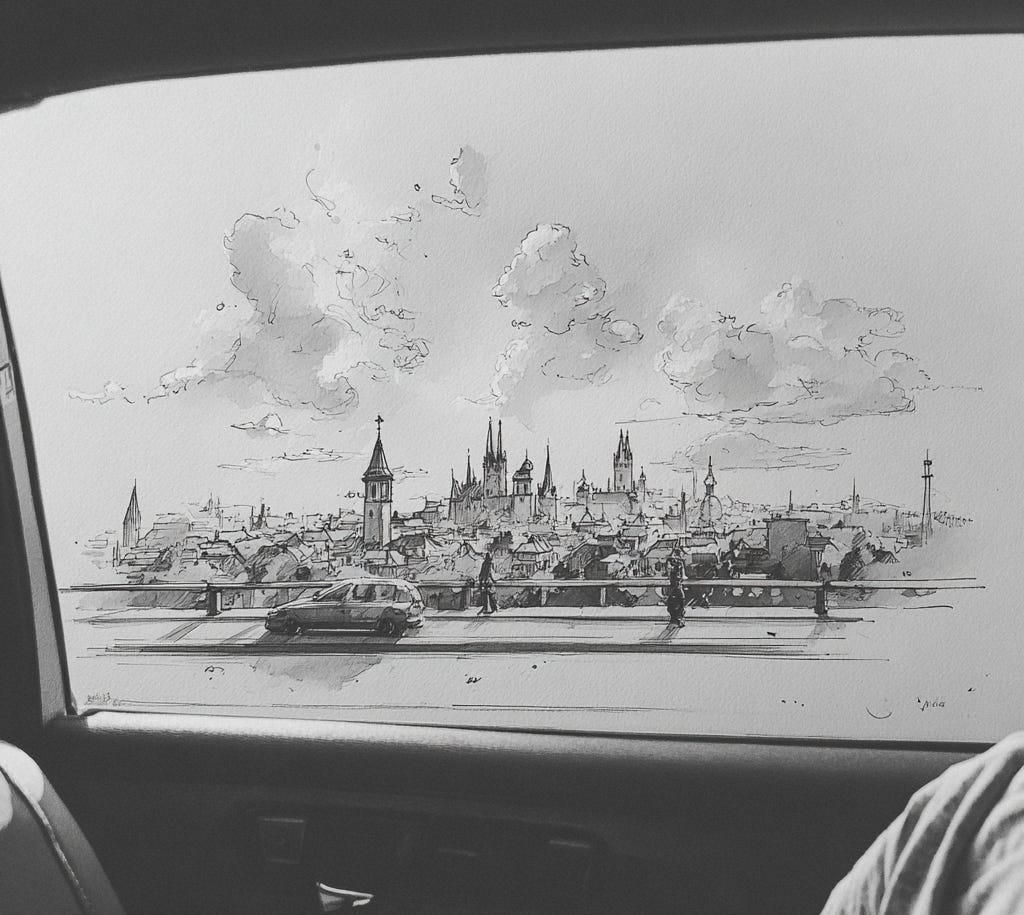
As their silver Range Rover glides off and effortlessly merges onto the Swiss autobahn, Marie leans back in the plush, black leather and studies the Swiss skyline through the tinted glass. Of all the European countries, Switzerland is by far her favorite. It’s old and dates back to the Neolithic age, but unlike the rest of Europe, has been willing to evolve as times required. Famously, the country’s moral flexibility and historic neutrality had enabled it to thrive and prosper during the continent’s most difficult times. Swiss bankers did business with Nazi Germany to help finance the building of concentration camps and sixty years later helped US billionaires hide trillions in offshore bank accounts and tax havens to avoid Uncle Sam.
In other words, when Ryndel Corporation had wanted to expand into EMEA twenty years ago, there had been really only one appropriate option suitable for their flexible principles and needs; among the Swiss, Heinrik Ryndel had found his people.